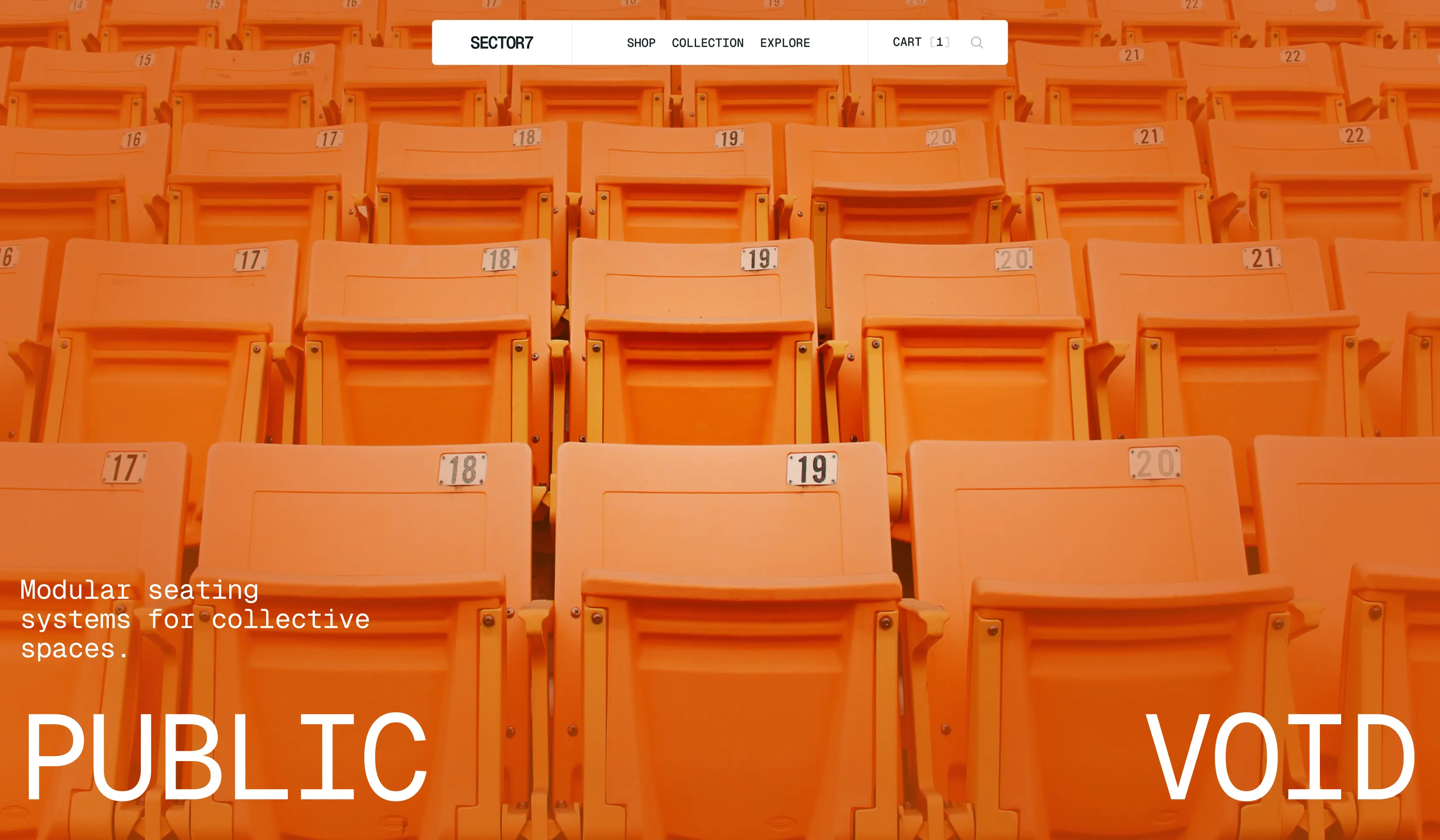
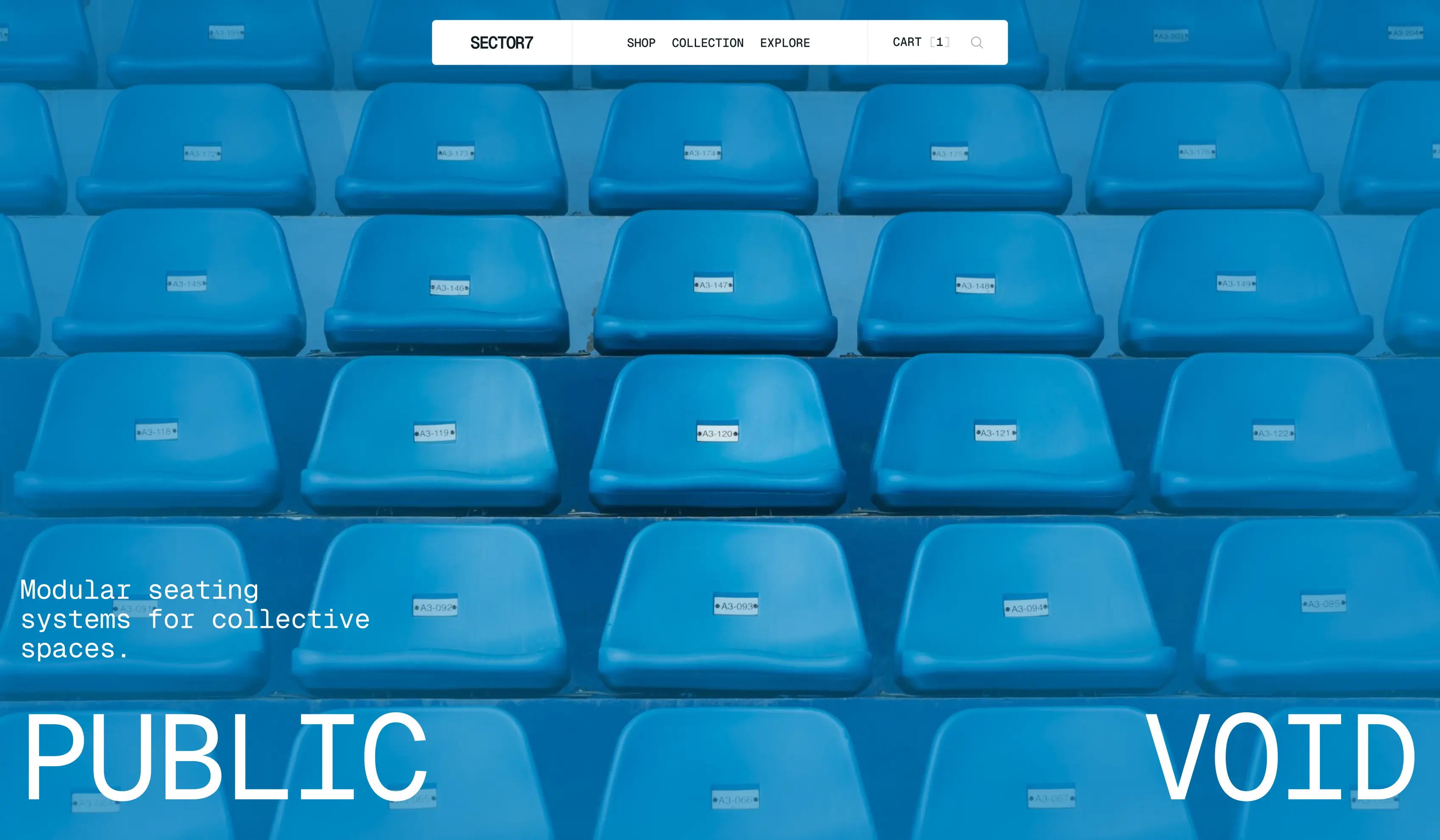
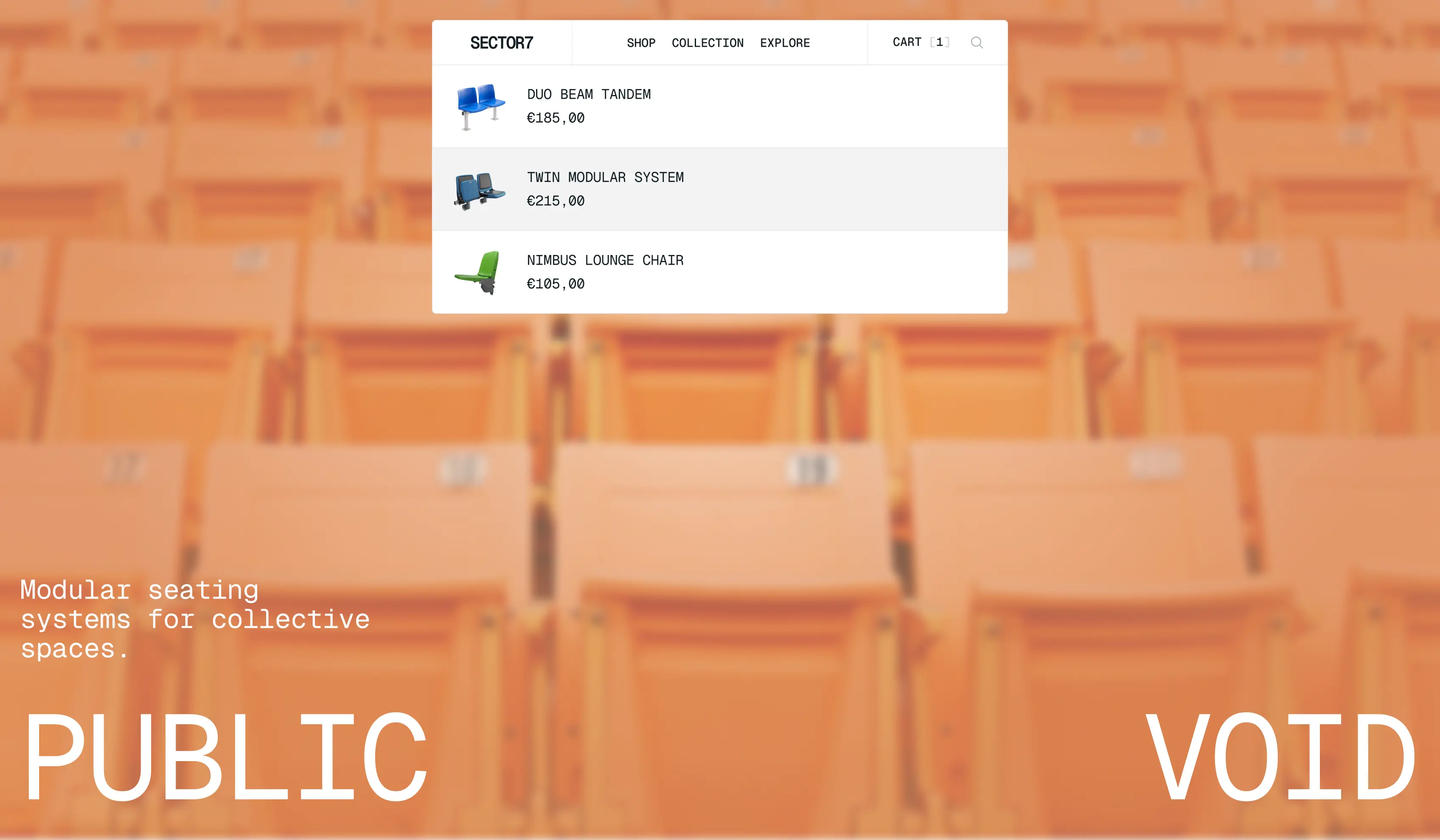
Most Shopify portfolio pieces stop at a single landing page. SECTOR 7 is an internal build that exercises Liquid end to end — base layout, section schema, theme settings, the bones underneath the storefront. Stadium seating is a placeholder canvas, picked because it forces a layout that has to carry both retail browsing and procurement quantities without choosing one. The hero and category frames are built as configurable sections, so the same theme could re-skin from heavy infrastructure to a softer consumer category without a re-build. The scaffolding is the deliverable. The product is whatever sits on top of it.

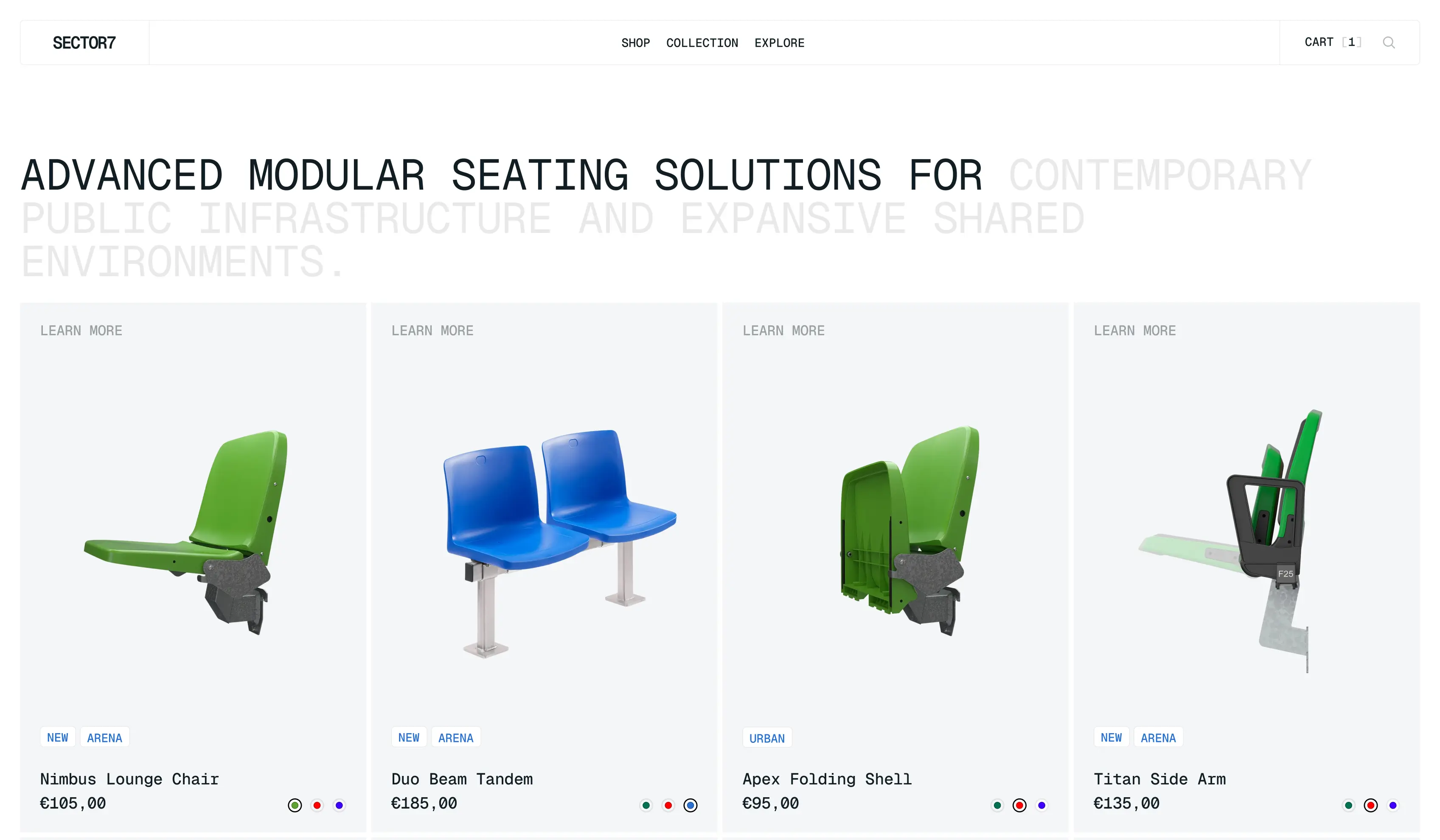
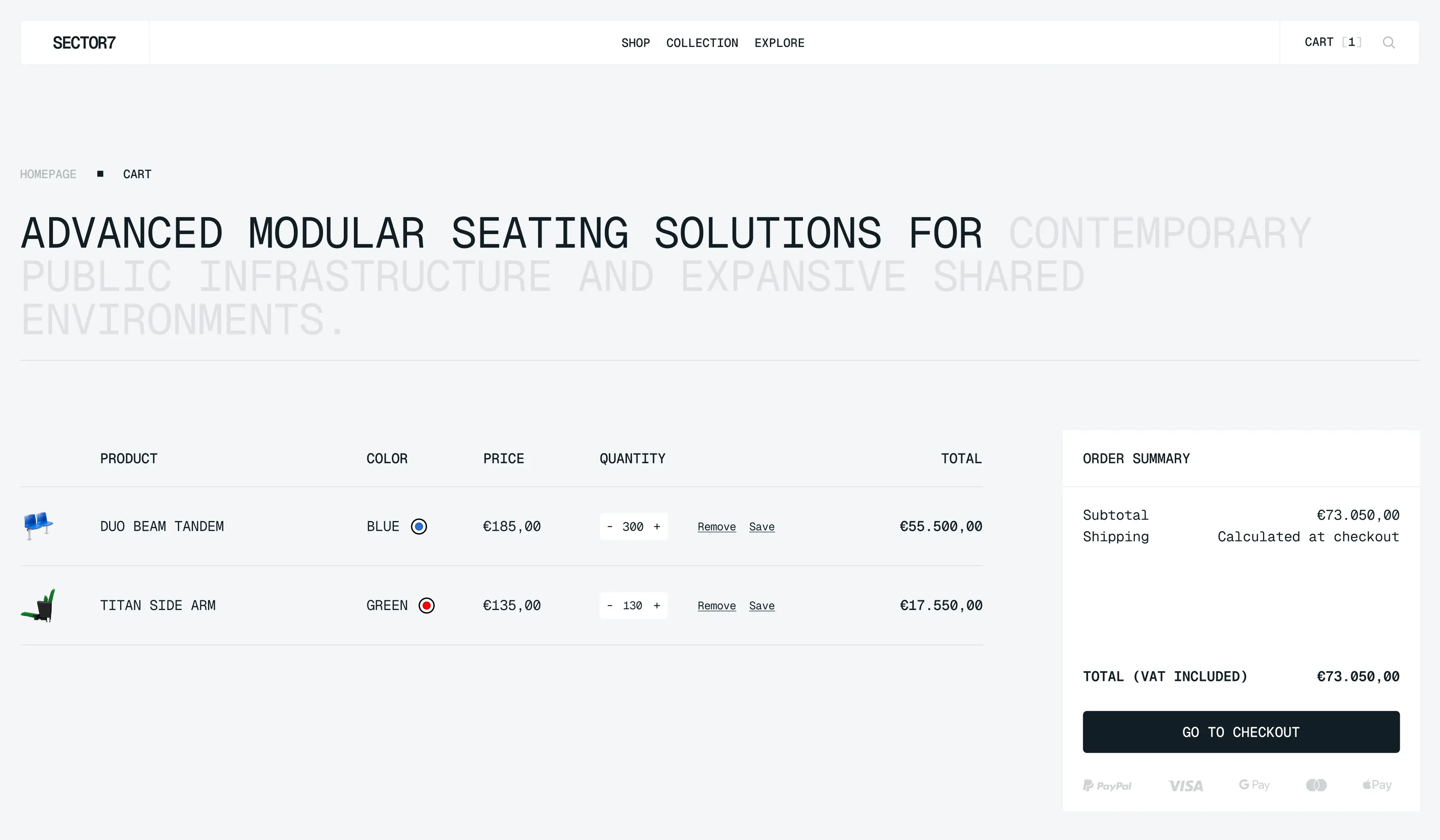
Liquid's commerce surface is where most themes show their seams — PLPs that can't filter, PDPs that hard-code variants, carts that break under bulk. The build treats those three views as one exercise. The product listing wires sort, filter, and pagination through the section schema rather than hard-coded markup, so any category re-skins without a template fork. The detail page lifts spec data into metafields and renders inline labels instead of a tabbed stack —> the variant picker reads the same on a single chair or arena-scale quantities. The cart holds at bulk without collapsing into a quote-request form — the line-item template carries the math instead of routing it off-platform.
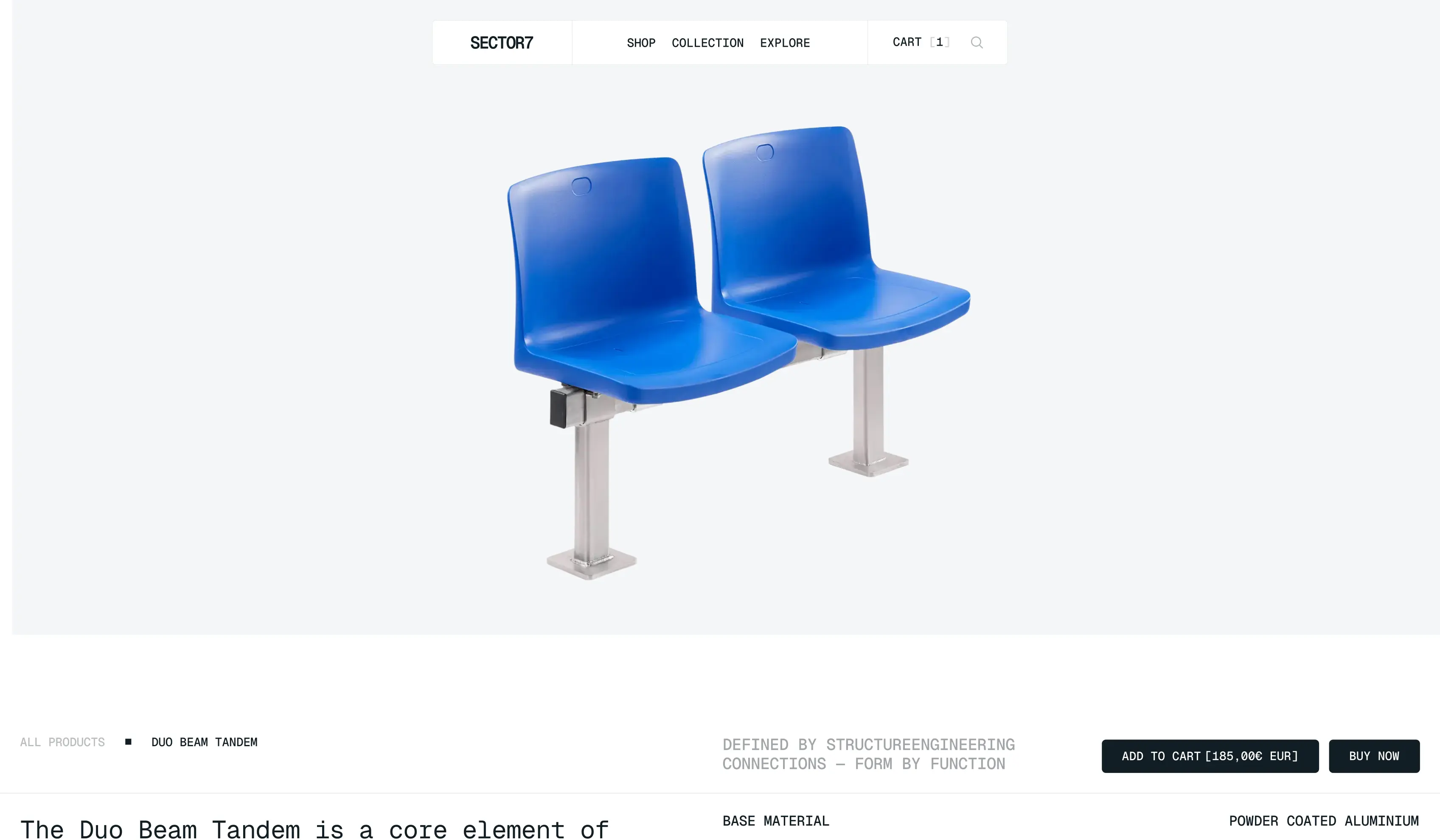
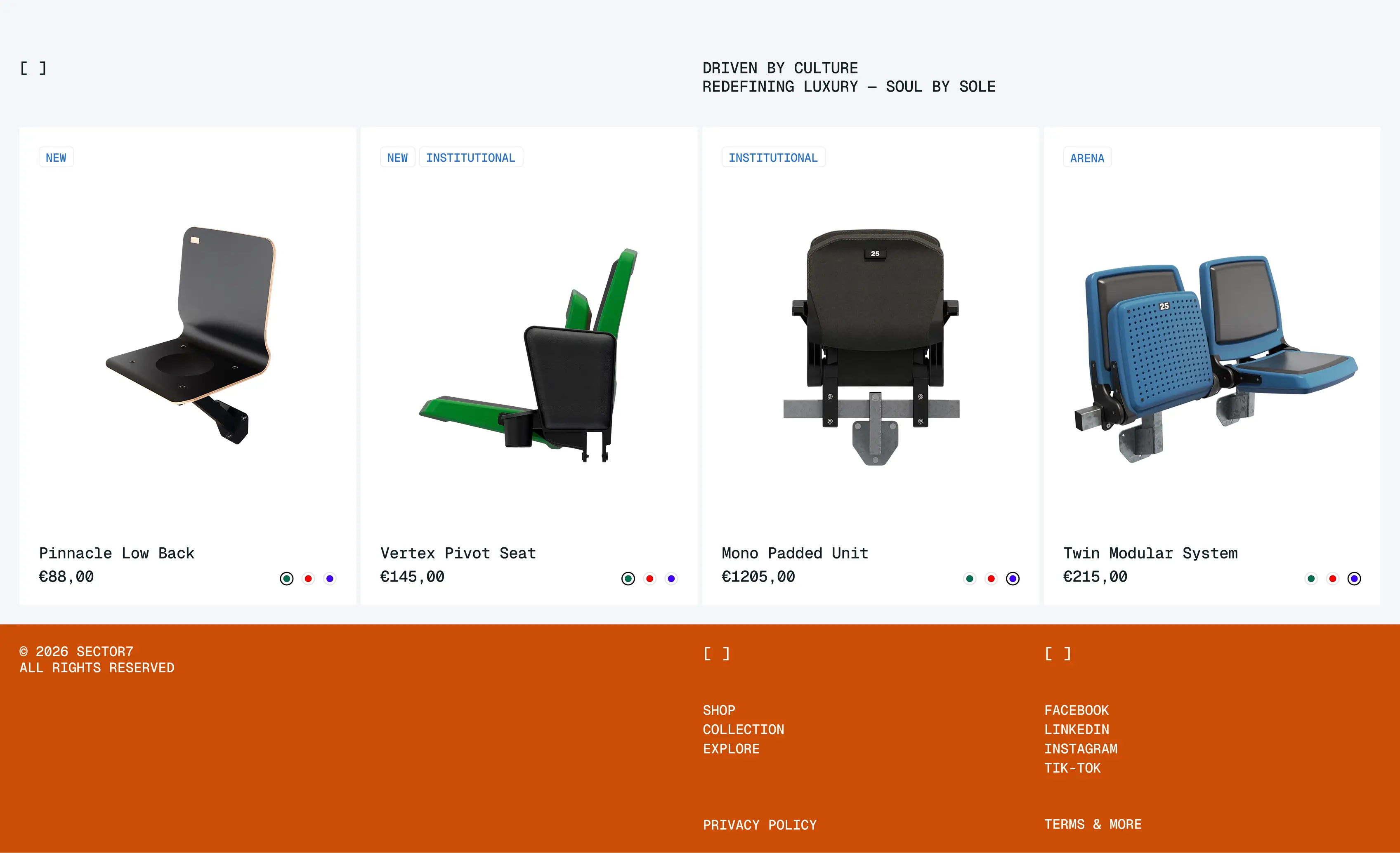
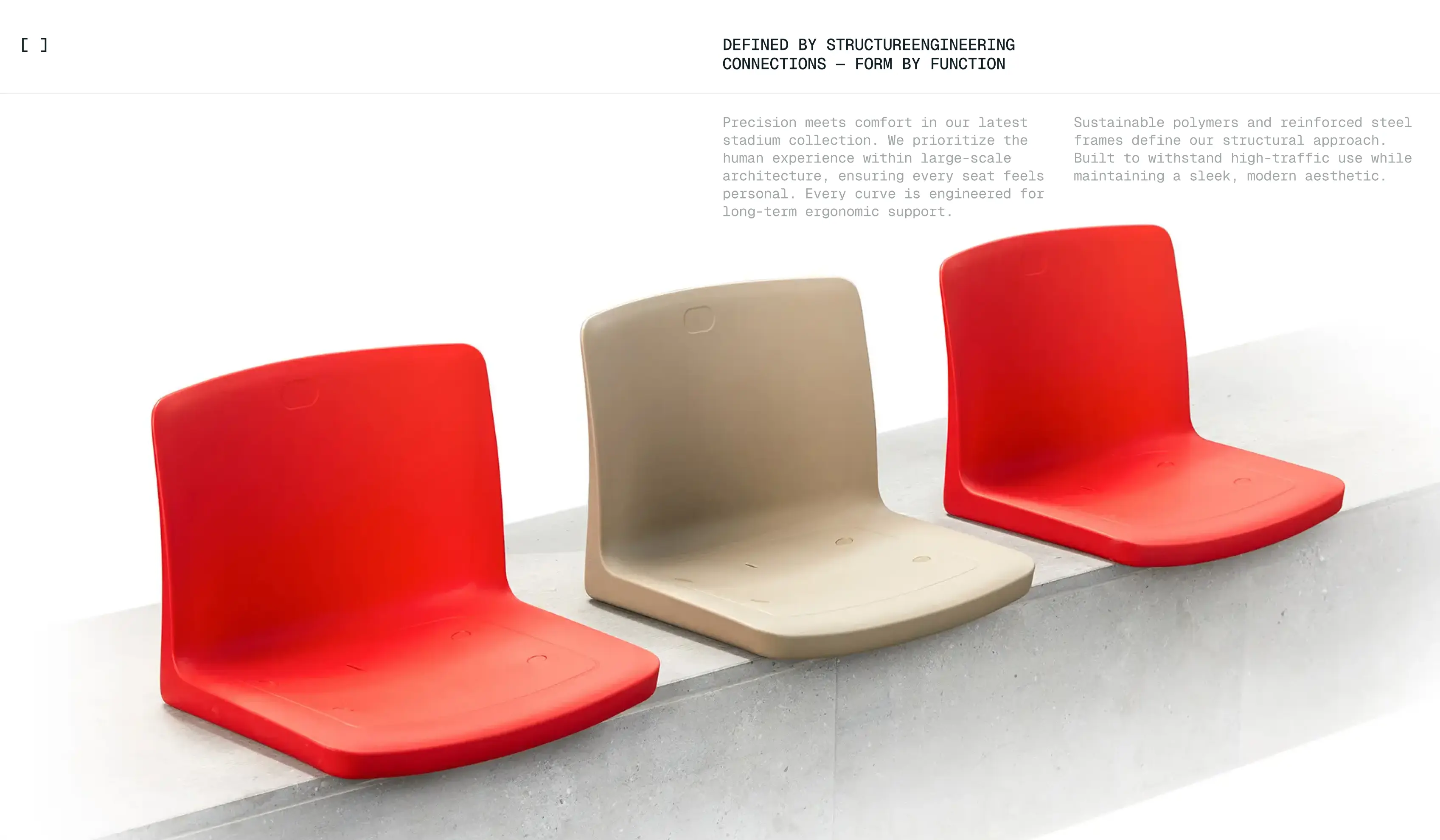
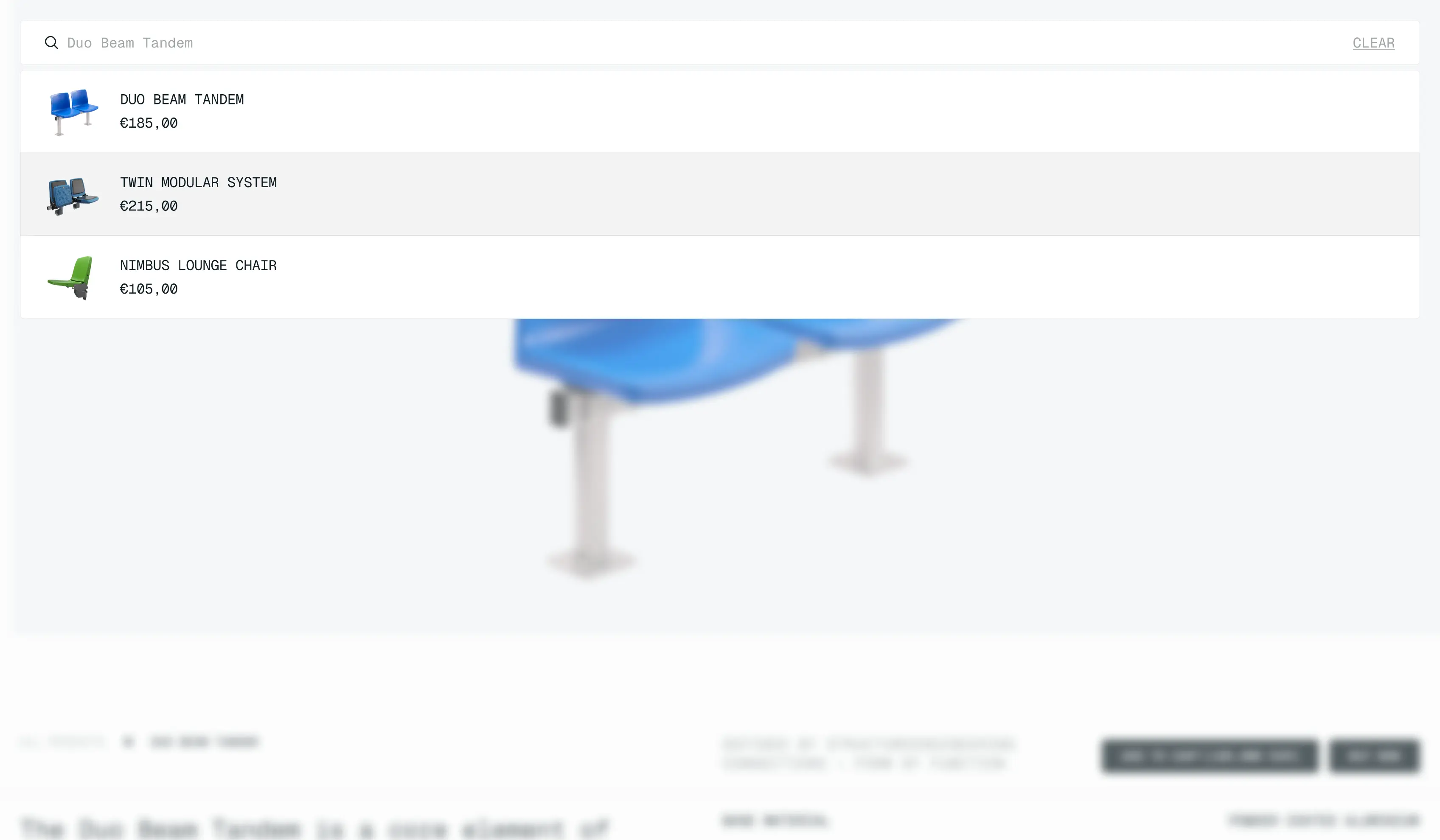

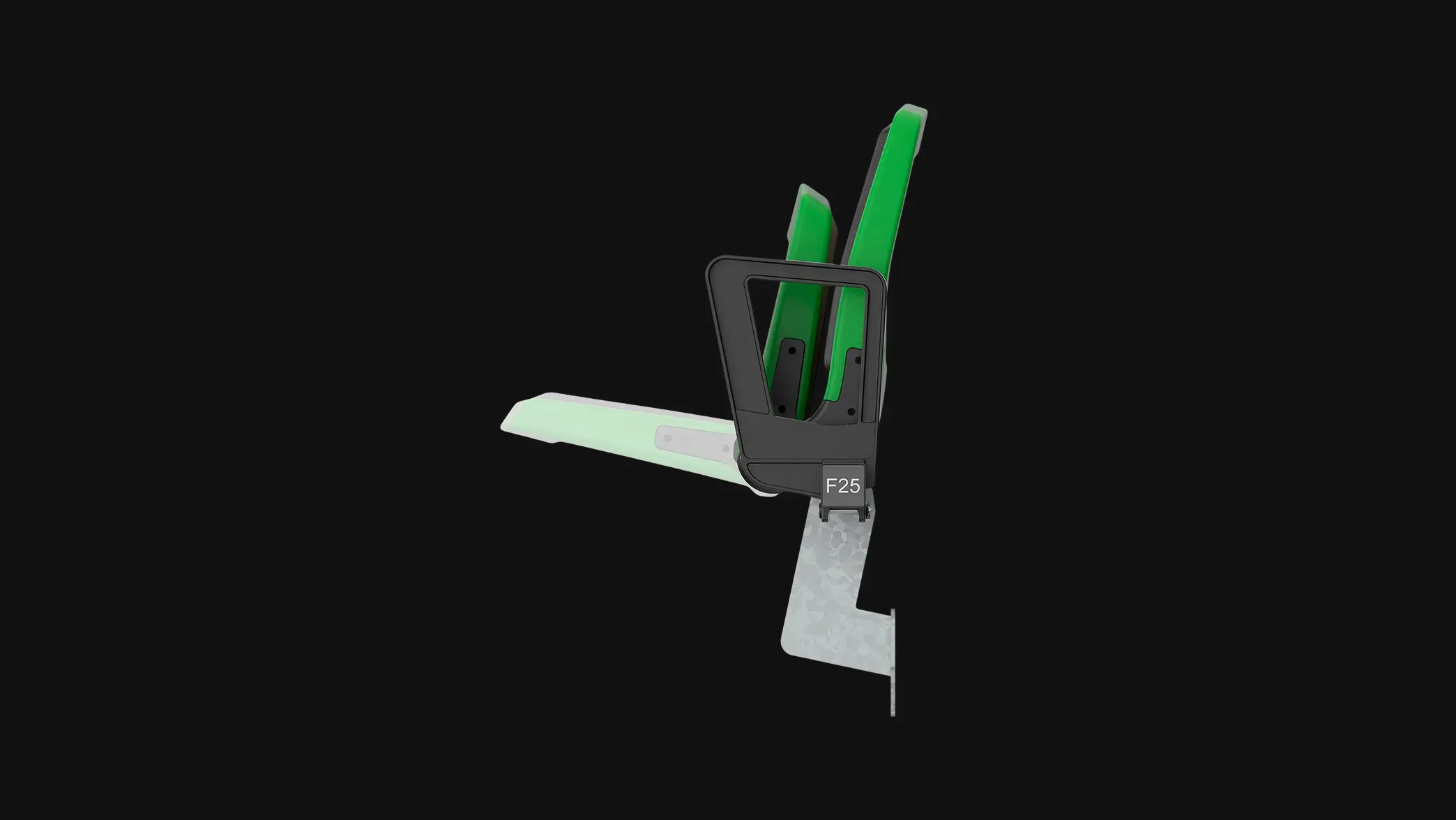
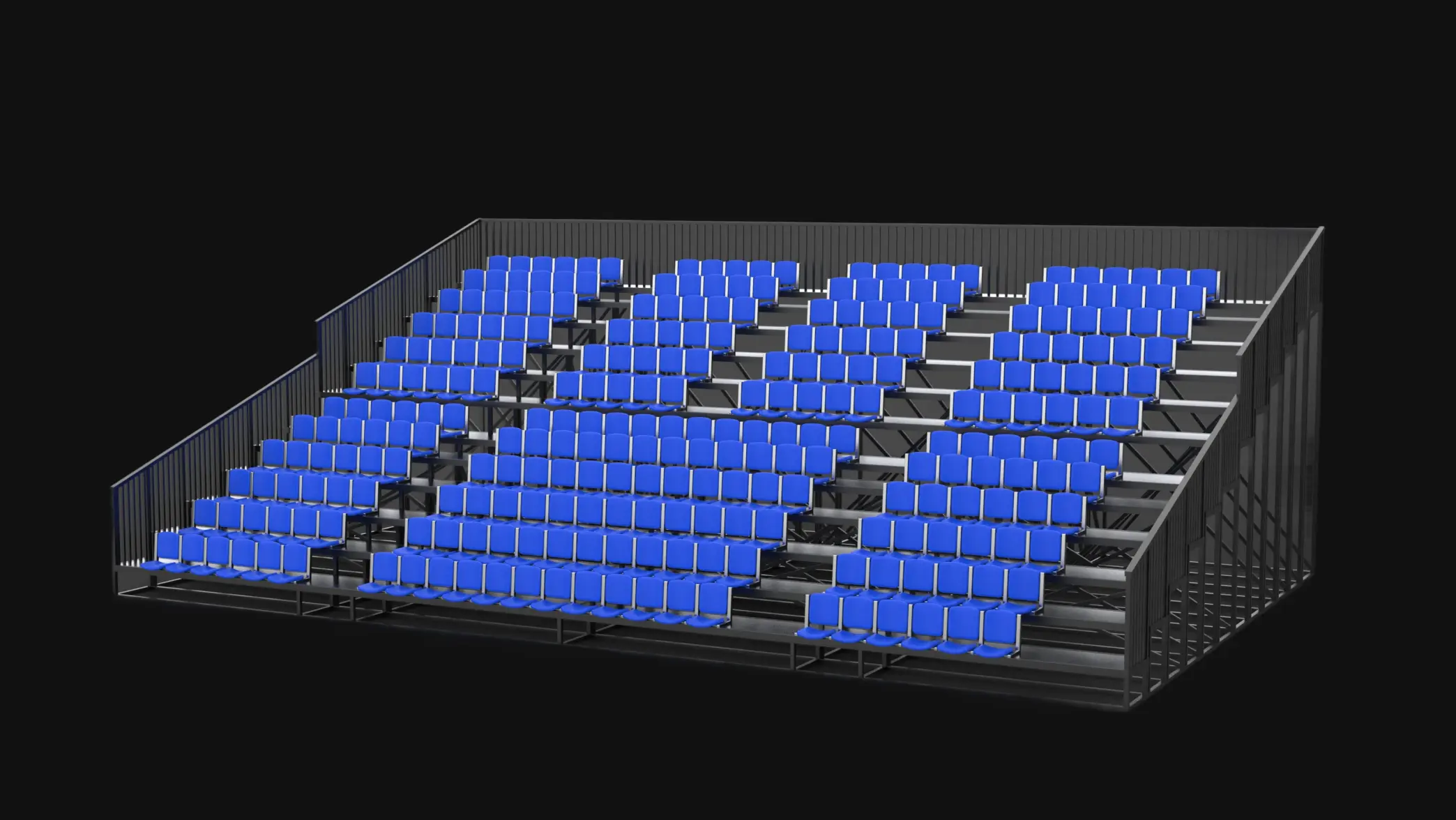
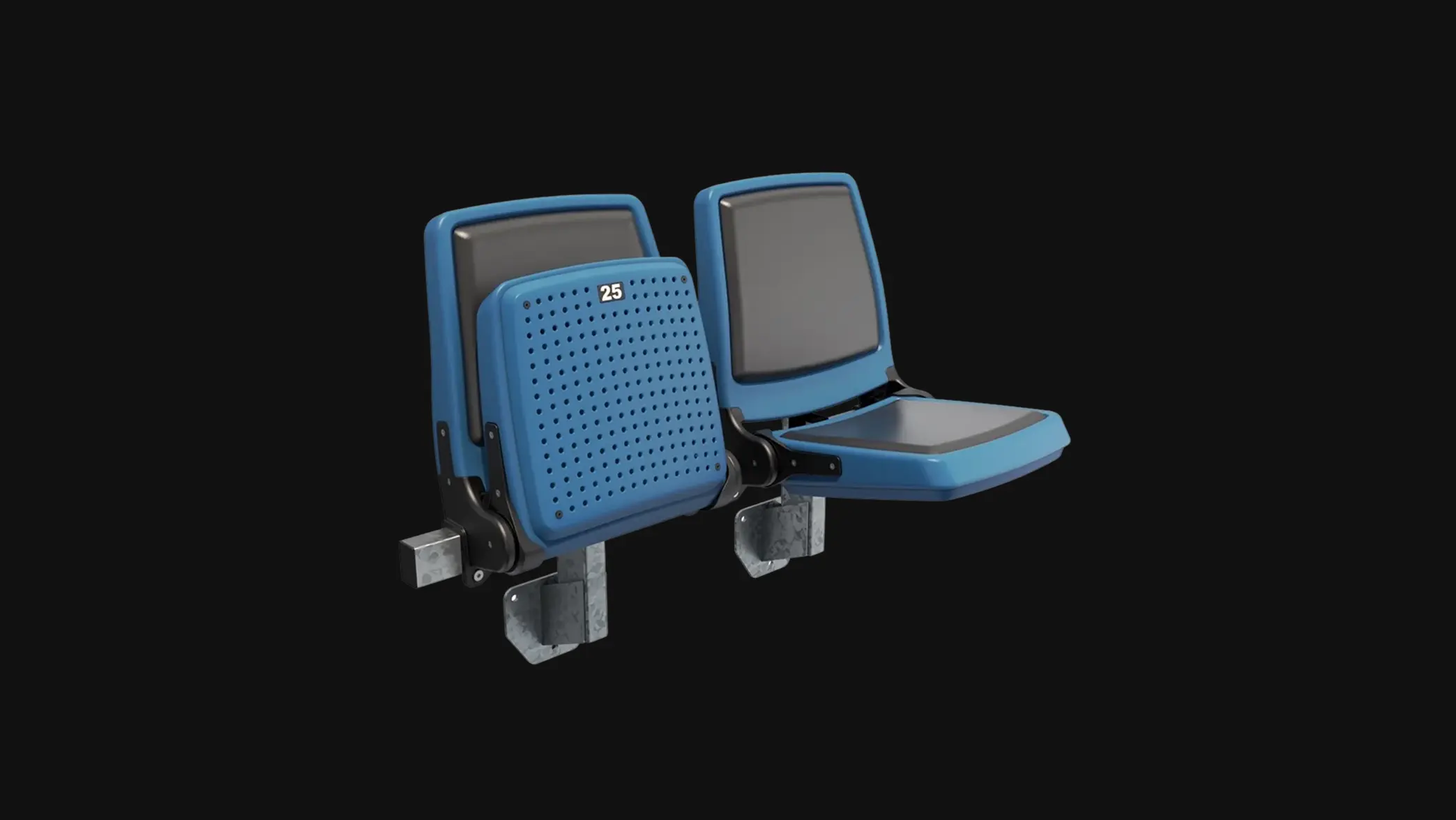
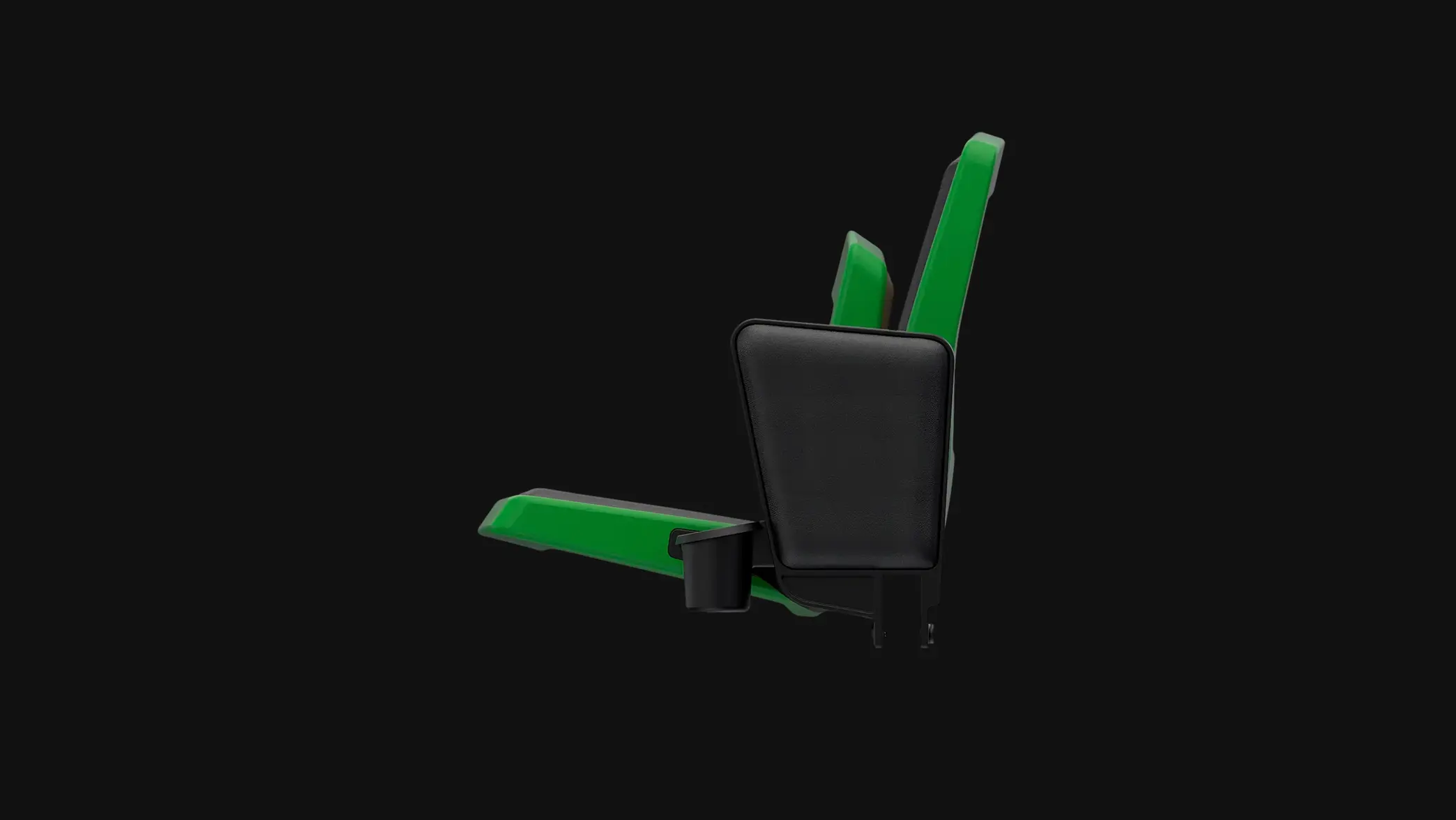
Concept builds run into the same wall: the storefront needs product imagery before the product exists. The 3D pass was about feeding the Shopify catalog from a render library instead of a photo shoot — one neutral backdrop, one lighting setup, one angle, eight separate files. The render rig was set up to push directly into product media slots, so adding a new variant in the admin and dropping a fresh render kept the PLP visually consistent without anyone touching CSS. The motion layer reuses the same assets, so the product page and the homepage share one source library —> renders earn back their cost across surfaces, instead of sitting in one hero and going stale.
Most agencies treat interaction design as an afterthought — a few effects layered on before launch. Here, it’s part of the team structure. Interaction architecture isn’t an add-on. It’s part of how every page gets designed from the start.


